Discovering the Charm of Babyday: A Balanced Look at This Handwritten Display Font
In the vast landscape of digital typography, finding a typeface that genuinely captures a specific emotion can be challenging. Designers often struggle to balance legibility with personality, especially when the goal is to evoke warmth and genuine connection. Babyday emerges as a distinct solution in this crowded field, positioning itself not merely as a font, but as a stylistic choice designed to inject sweetness and friendliness into visual communication. For professionals aged 20 to 50 who are evaluating design resources, understanding where this typeface fits within the broader ecosystem of fonts is crucial for making an informed decision.
Understanding the Distinctive Character of Babyday
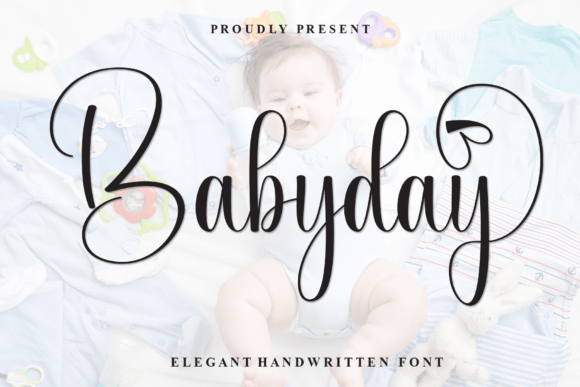
At its core, Babyday is a handwritten display font that prioritizes emotional resonance over strict geometric precision. Unlike standard sans-serif or serif typefaces that rely on uniformity, this font embraces the organic irregularities of human handwriting. The result is a character set that feels approachable and unpretentious. The strokes vary slightly in weight and angle, mimicking the natural flow of a pen moving across paper. This imperfection is intentional; it is what gives the font its "jovial touch" and prevents the design from feeling sterile or corporate.
The aesthetic appeal of Babyday lies in its ability to convey joy without shouting. It does not demand attention through aggressive sizing or neon colors; instead, it invites the viewer in with a soft, playful demeanor. This makes it particularly effective for projects where the message relies on personal connection. When a designer selects Babyday, they are choosing a tool that suggests a handcrafted experience, even if the final output is purely digital. The font's structure allows it to stand out in headlines while maintaining enough readability to function effectively in subheadings or short body text segments.
Comparative Analysis: Where Does It Fit?
To truly evaluate Babyday, one must compare it against other categories of typography. In the world of design, fonts generally fall into functional categories (like Arial or Helvetica) and expressive categories (like script or display fonts). Babyday sits firmly in the expressive realm, but it occupies a unique niche between formal calligraphy and casual doodles.
- Formal Calligraphy: Traditional script fonts often feature high contrast between thick and thin lines and elaborate flourishes. While elegant, they can sometimes feel too rigid or expensive for modern, casual designs. Babyday offers a softer alternative that retains elegance but removes the stiffness.
- Casual Doodles: Many free handwriting fonts are intentionally messy or difficult to read. These are often best reserved for very short accents. Babyday strikes a balance here by ensuring that every letterform is clear and recognizable, making it suitable for longer phrases than typical decorative scripts.
- Standard Sans-Serif: Clean, modern fonts like Roboto or Open Sans are versatile but lack emotional depth. They are perfect for data-heavy interfaces but fail to convey the warmth required for greeting cards or wedding invitations. Babyday fills this emotional gap perfectly.
Evaluating Strengths and Practical Tradeoffs
No single typeface is a universal solution, and Babyday is no exception. Understanding its strengths helps designers leverage its potential, while acknowledging its limitations ensures it is used appropriately. The primary strength of this font is its versatility in creating a friendly atmosphere. Whether used for a children's book cover, a bakery logo, or a social media graphic promoting a community event, Babyday instantly sets a positive tone.
However, there are tradeoffs to consider. Because the font is stylized, it may not pair well with highly structured layouts that require absolute grid alignment. The organic nature of the letters means that kerning (the space between characters) requires more manual adjustment than with a standard system font. Additionally, while excellent for display purposes, using Babyday for large blocks of body text can lead to reader fatigue. The eye needs to work harder to process the varying stroke widths and playful shapes compared to a neutral sans-serif.
Another critical factor is the target audience. If a project targets a demographic that values tradition, formality, or authority—such as a law firm or a financial institution—Babyday would likely be counterproductive. Its inherent playfulness could undermine the seriousness of the content. Conversely, for brands aiming to appear accessible, youthful, or nurturing, this font is a powerful asset.
Best-Fit Situations for Babyday
When deciding whether to incorporate Babyday into a project, consider the following scenarios where it shines:
- Wedding Invitations: The romantic and joyful nature of a wedding aligns perfectly with the font's sweet attributes. It adds a personal, hand-written feel that guests appreciate.
- Greeting Cards: From birthdays to thank-you notes, Babyday enhances the sentiment of the message. It feels like a note written by a friend rather than a template generated by software.
- Children's Products: Toys, educational materials, and baby clothing benefit significantly from the playful energy of this typeface. It signals fun and creativity immediately.
- Lifestyle Blogging: For bloggers covering topics like home decor, parenting, or travel, Babyday can serve as an excellent header font that breaks up the monotony of standard web typography.
Navigating Alternatives and Decision Factors
While Babyday is an excellent choice for specific applications, it is important to recognize that it is just one option among many. Designers exploring alternatives might look toward other handwritten styles that offer different degrees of formality or legibility. Some alternatives might focus more on boldness, while others prioritize extreme legibility for small screens.
When comparing options, the decision matrix should include the following factors:
- Linguistic Support: Does the font support the necessary character sets for your language? Some decorative fonts have limited glyph sets, which can be a significant limitation for international projects.
- Weight Variations: Does the family include multiple weights (light, regular, bold)? Having variations allows for better hierarchy within a design, whereas a single-weight font limits design flexibility.
- Licensing Costs: Commercial usage rights vary widely. Some fonts are free for personal use but require a license for commercial projects. Evaluating the budget against the intended reach of the design is essential.
- Pairing Potential: A great display font needs a reliable partner. Babyday pairs well with simple, clean sans-serifs that do not compete for attention. If you cannot find a complementary font that balances the playfulness of Babyday, the overall design may feel disjointed.
When to Choose Something Else
There are moments when reaching for Babyday might be a mistake. If the design requirement involves conveying speed, efficiency, or technological innovation, a sleek, modern typeface is a superior choice. Similarly, in contexts where accessibility is paramount—such as signage for public spaces or emergency information—the clarity of a standard typeface outweighs the charm of a handwritten style. The goal is always to ensure the message is received clearly before it is appreciated aesthetically.
Furthermore, if the brand identity is strictly minimalist, the added "personality" of Babyday might clash with the intended simplicity. Minimalism often relies on the absence of ornamentation, whereas Babyday is inherently ornamental. In such cases, a subtle italic variant of a standard font might achieve the desired warmth without sacrificing the minimalist aesthetic.
Making the Final Choice
Selecting the right typography is a nuanced process that blends art with strategy. Babyday offers a compelling solution for designers seeking to add a pinch of creativity and a wave of friendliness to their work. Its ability to transform a standard layout into something warm and inviting is unmatched within its specific niche. However, it is not a magic bullet for every design challenge.
By carefully weighing the strengths of Babyday against the specific needs of the project, designers can make confident decisions. Whether adorning a wedding invitation or bringing life to a creative blog post, this font serves as a reminder that typography is more than just text—it is a voice. When used thoughtfully, Babyday ensures that voice is heard with a smile, resonating deeply with audiences who value sincerity and joy in their visual experiences.